
Rainmaking: The Mystery and Practice of Controlling the Water Element
The element water is life, and nowhere is this more appreciated than in the worldview of African culture. From prehistoric Africa, the ability to control and harness water has been crucial for the survival of traditional African society, especially in regions where agriculture is the backbone of life—ensuring adequate rainfall can mean the difference between bountiful harvests and famine. The art of rainmaking is an ancient practice and remains one of the most fascinating native sciences that our ancestors bequeathed to us. Interestingly, modern Africans still engage in this practice, and it is common in many African communities, with specific regions and ethnic groups having their own unique approaches to controlling the water element. This art of control is done by an individual known as a Rainmaker—one who has the ability to connect with the spirit forces to conjure rain and alleviate droughts. They often act as intermediaries between the spiritual and physical worlds, invoking divine powers to bless the land with rain.
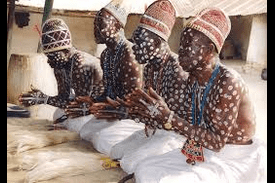
Rainmaking rituals may vary widely across Africa, as they are not limited to any specific region. However, one important common or uniting factor in the practice is sacrifices and offerings, spiritual invocations, and the use of sacred objects, incantations, and herbs. Like in the Shona culture of Zimbabwe, for instance, rainmakers might sacrifice a black goat, symbolising a plea to the ancestors to intercede with the god of rain, and connect the ritual with playing the mbira music in order to communicate with the spirits, which is considered a sort of conduit to the divine, helping rainmakers connect with the spiritual realm. While in the Bamileke tribe in Cameroon, the practices involve the gathering of special herbs that are often burned, and the smoke is said to carry prayers to the sky. The rainmaker is said to wear a mask, often representing ancestral spirits, and is believed to help channel divine energies for the task of rainmaking.
Moreso, the Zulu people of South Africa also have their own approach to rainmaking, which is deeply spiritual and symbolic. The Zulu Rain Makers, often women, known as the Isanusi, are highly respected in their communities, and their abilities are highly sought after. The Isanusi performs a series of rituals, prayers, and chants that are directed at Unkulunkulu, the supreme god, and other ancestral spirits and are said to connect them with the spirits and the elements, allowing them to control the weather. These rituals involve offerings of food and drink, animal sacrifices, and prayers. While in Nigeria, the Yoruba people have their own unique way of making rain, involving the use of a divination system known as Ifa. The Ifa priest (a position that is often hereditary and holds great respect within the community) uses the divination system to communicate with the water spirit and request for rain to fall.
Behind all these musics and dances, incantations, rituals, sacrifices, and burning of herbs, rainmakers practice their art secretly—not even in the company of their heirs, only bequeathing the power to their servants or when nearing death. For this reason, the details of the actual rainmaking process remain the guarded secrets of the rainmakers. Although modern Africans have criticised the practice as superstitious or unscientific, arguing that the elements of water are beyond human control and that rainmaking is therefore a futile endeavour, others have accused rainmakers of fraud and deception, suggesting that their supposed abilities are nothing more than a clever ploy to extort money and other material gains. The truth remains that the art of rainmaking in African culture goes to show how environmentally aware our ancestors were, as the principles behind rainmaking show a clear understanding of weather patterns and respect for nature.
Despite these criticisms, rainmaking remains an important part of African culture and history. Although modernization has slowly eroded this culture. However, efforts have been made to retain it. Like the Nganyi people of western Kenya, they have recently been offered a way of reviving this tradition through a project aimed at using indigenous knowledge in disaster prevention and control. It is funded by Britain and Canada. The programme brings the Kenya Meteorology Department (KMD) and traditional rainmakers together to produce more accurate forecasts and disseminate them more widely. At first, rainmakers were described as backward people, their methods primitive, and their shrines dismissed as laboratories of black magic. But, like the cornerstone rejected by the builders, traditional African rainmakers are slowly gaining recognition. The scientific world has begun to embrace them as partners in unravelling the never-ending mysteries of climate change.
Rainmaking is a traditional practice founded on African soil and inextricably interwoven with the culture of the people, expressed in beliefs and practices, myths and folktales, songs and dances, liturgies, rituals, and proverbs. It is a practice which is slowly but constantly updated by each generation in the light of new experiences. Rainmaking rituals will continue to be practiced as a way of “praying for rain”.
The mystery of rainmaking in Africa clearly reveals the ingenuity, spirituality, and communal strength of African societies. This ancient practice, rooted in a deep understanding of nature and respect for the spiritual world, further reveals the relationship between humans and the environment. As we face serious modern environmental challenges leading to droughts, hunger, and poverty, the indigenous knowledge of rainmaking could offer sustainable future potential and valuable insights.